November 20, 2025
Why Small Schools Build Big Communities: The Paradigm Difference
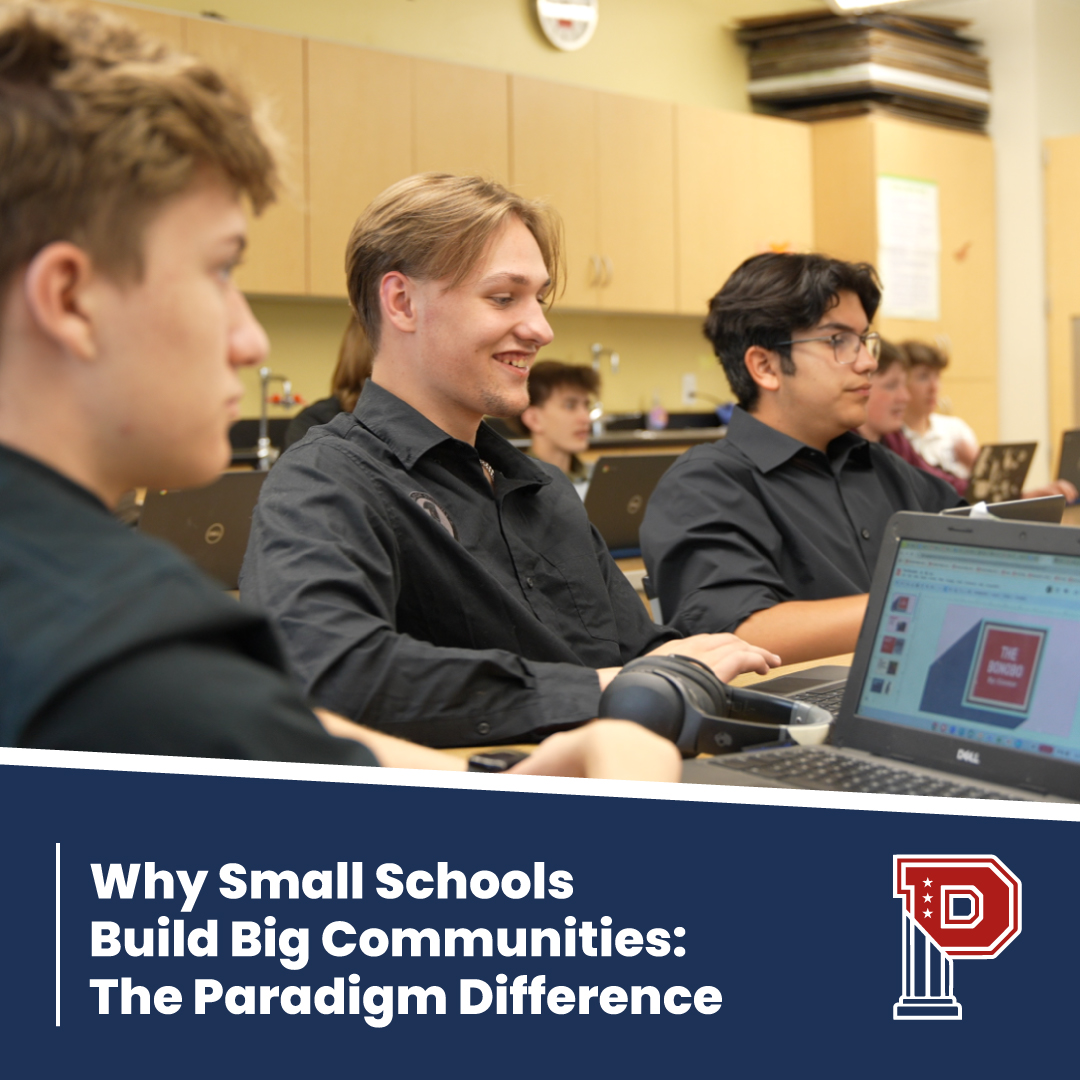
Personal attention, real projects, and a place to belong – that’s Paradigm.
Choosing a school is about more than test scores, it’s about the people your child will see every day. Small schools often do something big: they turn classrooms into communities where students feel known, safe, and pushed to grow. At Paradigm Schools, that’s exactly the goal. Here’s how small size, strong mentorship, and a shared culture combine to make a school where kids belong and parents breathe a little easier.
People Notice Your Child
In a smaller school, teachers can actually get to know each student. They recognize their strengths, their worries, and the way they learn best. That’s central to Paradigm’s model: we call students “scholars” and teachers “mentors,” and mentoring is built into the school’s day-to-day work. When an adult in the building knows your child personally, problems get caught early and encouragement is real and timely. Such attention to detail makes school feel safer and more motivating.
A Culture Of Shared
Big schools can feel anonymous. Small schools build culture by design: shared rituals, clear expectations, and real opportunities to join clubs, performances, teams, and service projects. Paradigm emphasizes culture, mentorship, and service as part of its vision. This means kids don’t just sit through classes, they learn how to be part of a community that values character and responsibility. This consistency helps students focus on learning instead of navigating chaos.
Conversation and Connection
When classes are small, teachers can run seminars, Socratic discussions, and close-readings of real texts. Such formats need fewer students to work well. They also teach students to listen, respond, and respect different viewpoints. Putting ideas into words and having to answer classmates builds confidence and connection: students show up for the conversation because they know their voice matters. Paradigm’s curriculum leans on classics and original works precisely to spark those deeper conversations.
More Participation
In a small school, there’s room for students to try things like leading a club, performing in a play, running for student government, or presenting at a school assembly. These leadership moments aren’t reserved for a few stars, they open doors for lots of kids. Paradigm offers clubs, debate, art, athletics, and more. These options give students both responsibility and a place to belong. The result is a community full of faces parents will recognize at every event.
Personalized Feedback
Big class sizes make individualized feedback rare. In smaller settings, mentors can meet one-on-one to set goals, review work, and coach a student through a project. Personalized guidance is how small schools turn friendly classrooms into real growth environments. Paradigm’s mentor model intentionally supports scholar ownership of learning, so kids learn to manage projects and show their progress.
Community and Family
Small schools make it easier to treat parents as partners. Whether it’s easier volunteer chances, clearer communication, or regular mentor check-ins, families feel plugged in. Paradigm explicitly frames itself as a resource to families and strives to work with parents as the primary educators. This partnership makes transitions, behavior plans, and academic support far easier to manage. It also creates a shared purpose between home and school.
Mastery Projects
Critically, “small” doesn’t mean small ambitions. Paradigm’s programming includes mastery projects and hands-on labs that give students real, demonstrable work to show colleges or future employers. In a small school, these projects get meaningful mentor support and real audiences, not rushed, one-off assignments. This helps build confidence, competence, and a real sense of achievement.
How Our Model Helps?
At Paradigm, your child benefits from a personalized learning experience with a mentor who understands their individual name and learning style. Families are actively involved, receiving timely updates on their child’s progress and fostering strong connections with teachers. Students thrive in an environment where they can confidently explore leadership roles, engage in arts, clubs, or sports, and truly find their niche without being overlooked. We prioritize real-world projects over busywork, empowering students to present their work, reflect on their learning journey, and develop essential skills for future success.
All of these small-school benefits add up to something bigger: a place where kids grow academically, socially, and morally.
Takeaways
Small schools do one big thing well: they turn education into relationships. When adults know students, when discussion is central, and when families are partners, school stops being a set of classes and becomes a community that supports growth. That’s the Paradigm difference and for many families, it’s the reason they make the switch.
If a close-knit, mentor-led environment sounds right for your family, visiting is the best way to feel the difference.
You can read more about our approach on our website.
Ready to join our family? Apply Now!