November 10, 2025
How a Classical Education Prepares Scholars for College and Careers
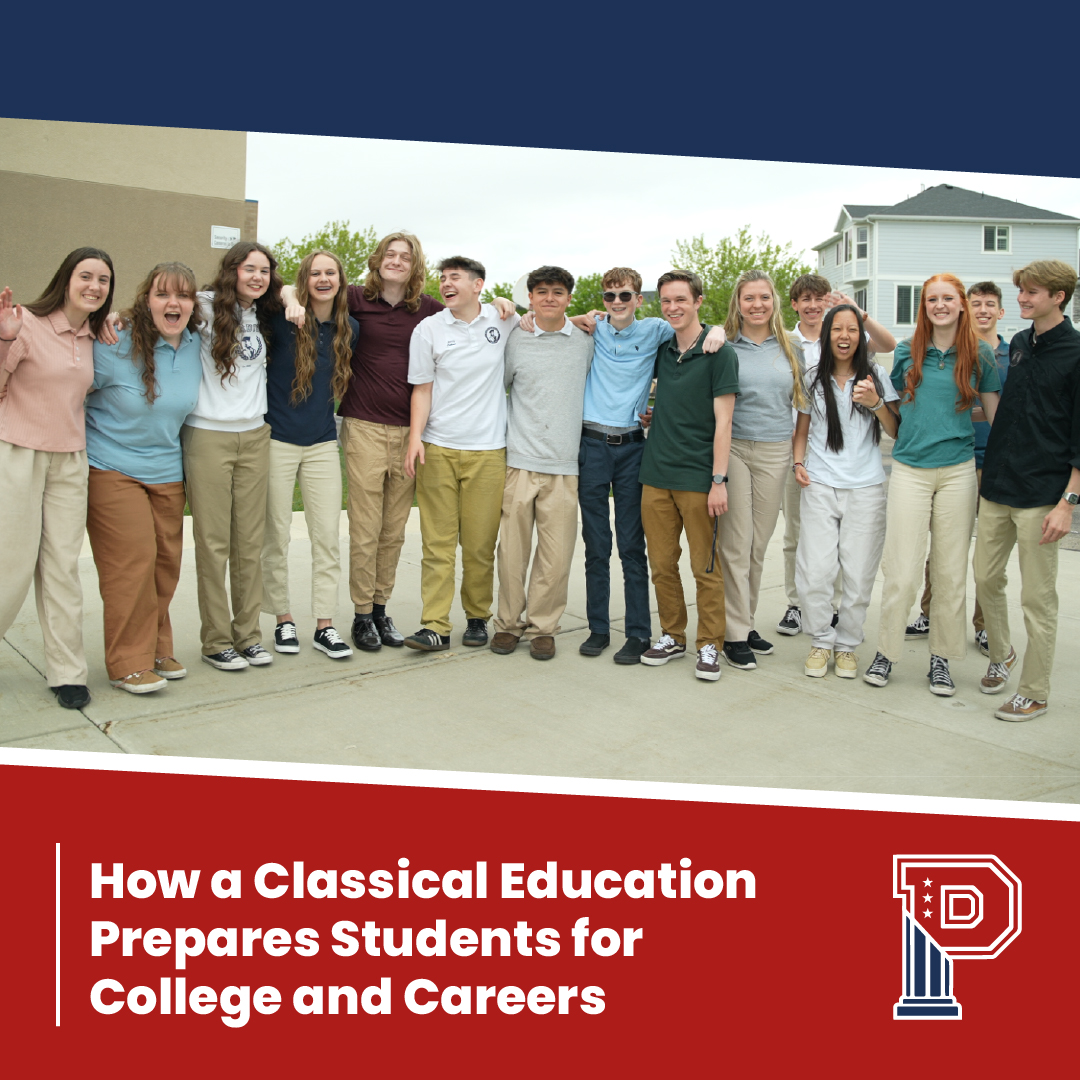
Discover how Paradigm’s approach helps teens succeed.
Parents often ask: “What does a classical education actually do for my child’s future?” The simple answer is – a lot! A classical program that centers on primary texts, discussion, and mentor-guided projects gives scholars habits and skills that matter in college and in the workplace: clear thinking, strong writing, persuasive speaking, and the ability to learn on their own. So, let’s how at Paradigm Schools, we put these ideas into practice.
Teaches How To Think
Not Just What To Remember
Most employers and college professors care less about memorized facts and more about scholars who can read closely, spot an argument, and explain their view clearly. Classical education uses original works, primary texts and great books as the source material, and then builds lessons around conversation, analysis, and writing. This daily practice trains scholars to analyze complex ideas, not just repeat them.
At Paradigm, we emphasize this “learn how to think” approach across classes and seminars.
Scholars Practice Communicating
Written and Spoken
A big part of classical programs is discussion (Socratic seminars) and writing about ideas. Speaking up in a seminar or writing a clear response forces scholars to organize their thoughts, support them with evidence, and listen to others. These are the exact skills colleges test for in essays and interviews and that employers look for in presentations and team meetings.
At Paradigm, we build frequent opportunities for scholars to speak, debate, and present projects in class and during seminar programs. This is important because strong writers and speakers get noticed in admissions essays, interviews, and on the job. They’re more likely to lead projects and take on responsibility.
Mentor-Based Learning
Personal and Strategic Learning
Classical schools often pair small classes with strong mentor-scholar relationships.
At Paradigm, instructors act as mentors who meet with scholars one-on-one to set goals, track progress, and coach projects. Such mentoring means scholars don’t get lost in a crowd, they get regular feedback and a plan that prepares them for college-level expectations.
Colleges and employers value students who show growth and initiative. A mentor helps a teenager turn a rough idea into a strong portfolio piece, research project, or extracurricular achievement; evidence that stands out on applications and resumes.
Real Projects
Work That Helps Build Understanding and Execution
Beyond tests, classical programs emphasize meaningful projects — research papers, labs, performances, and mastery projects that require preparation, execution, and reflection.
At Paradigm, scholars are required to do Mastery Projects for graduation, which gives them a concrete body of work to show at colleges or to employers. These projects teach time management, problem-solving, and resilience; skills that grades alone don’t show. Also a portfolio of real work demonstrates skills in a way a transcript can’t. Colleges appreciate original research or sustained creative work; employers hire people with proven, demonstrable outcomes.
A Well-Rounded Education
Arts, Labs, and Leadership
Classical education at Paradigm isn’t only books. It includes labs, fine arts, debate, and service – so that scholars can practice creativity and collaboration as well as analysis. This broader set of experiences helps our scholars find strengths they might not discover in a test-driven environment. Paradigm lists strong arts and science programming alongside its academic seminars, which helps scholars apply their learning in real, messy projects. Colleges and employers look for teamwork and creativity, not just test scores. Scholars who can code, perform, lead a club, or run a service project bring valuable, diverse skills.
A Quick Checklist For Parents
If you’re comparing schools and want to know whether a classical program will help your child succeed, ask:
📋Do scholars get regular one-on-one mentoring?
📋 Are seminars and original texts part of the daily program?
📋 Does the school require substantial projects or portfolios for graduation? (Look for mastery or capstone projects.)
📋 Are there arts, labs, and leadership options alongside academics?
Takeaways
A classical education trains the mind the same way practice trains a musician: through repeated, focused, and guided work. For scholars heading into college or a career, the payoff is clear – they enter with habits of careful reading, clear writing, confident speaking, and real work to show for it.
If that sounds like the kind of preparation you want for your child, Paradigm Schools’ mentor-led, classical model is worth exploring. You can read more about our approach and college-prep strategies on our website.
Take the next step – Apply Now!